


Inside JK Rowling’s rape support centre that took on Amnesty – and won
Inside JK Rowling’s rape support centre that took on Amnesty – and won

Leaf ArbuthnotSat, August 1, 2026 at 5:00 AM UTC
0
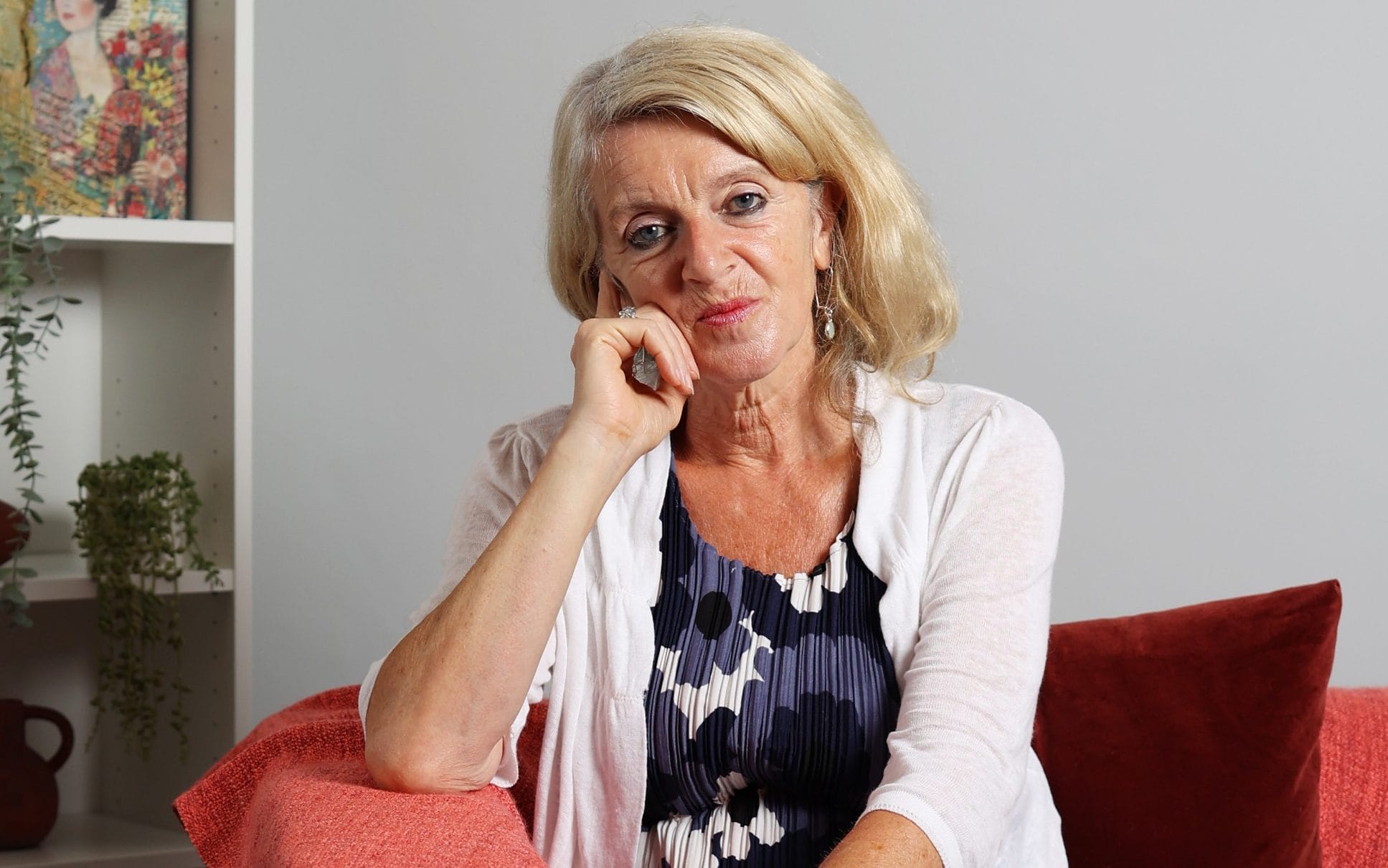
Lesley Johnston, the chief executive of Beira’s Place, has worked on gender-based violence for three decades - Clara Molden
In the Harry Potter books, there is a pub called the Leaky Cauldron, which Muggles – non-magic people – mysteriously never notice, even when they’re walking right past it. Beira’s Place in Edinburgh, the sexual violence support centre set up by JK Rowling in 2022, has a similarly unobtrusive air. Google Maps leads me to the right building, yet somehow I meander past it and have to double back.
Inside, the centre is tranquil and almost silent, with walls painted soothing shades of greige, plants in pots and inoffensive works of art on display. But the centre, which offers support to women only, has found itself at the heart of an extraordinary row that began when Amnesty International UK published a report last month in which it described Beira’s Place – as well as a host of other organisations – as “anti-rights”.
That report followed another document in May, which also framed the “gender-critical” viewpoint – namely, the belief that women are biological females, and men biological males – as a threat. The document claimed that the “growth and influence of the [gender critical] movement” in the UK was “worrying”, given that it “seeks to restrict the rights of trans people”.
Following a public outcry and threat of legal action from lawyers acting for Beira’s Place, Amnesty has since retracted its anti-rights report, and claimed in an apology that “the document should never have been published”. Beira’s Place welcomed the apology, but said that Amnesty’s statement “fails to recognise that those most severely impacted are the staff who work day in day out to support survivors of sexual violence, and the many women who need and use the service”.
Given the events of the past few weeks, it’s understandable that the centre might feel under siege. There has been, one staff member tells me, an increase in threats issued to those who work there “The usual,” she sighs when I ask what kind. “[For example,] ‘Why don’t you think about suicide?’”
Before the Amnesty report, Beira’s Place had repeatedly come under fire from activists both because it restricts its services to biological women, and for its links to Rowling, who has become the figurehead of the gender-critical viewpoint in the debate over trans rights. But the team works hard to make the centre feel safe and calm for the women who use it, whatever might be going on beyond its walls.

Beira’s Place is solely funded by its founder, JK Rowling - Tolga Akmen/AFP
The chief executive of Beira’s Place, Lesley Johnston, who has worked on gender-based violence for three decades, first heard of the Amnesty report pretty much the moment it was published. Her first reaction was to go into emergency mode – convene meetings with staff and board members, and try to work out how best to talk about what happened to the vulnerable women receiving support.
The accusation that Beira’s Place is somehow undermining human rights has hit staff particularly hard, says Johnson. “Some staff really internalised it.” Their work, which mainly consists of one-on-one sessions with victims of rape and other sexual assault, is difficult. “You’re working with very complex trauma... To be doing that job, day in day out, and then to get this report which accuses you of being anti-rights and anti-women – it’s deeply painful, and it’s deeply frustrating because it’s so not true. Part of you thinks, ‘Oh, for f---’s sake. It’s so ridiculous, I can’t take it too seriously.’ But the fact is, it’s out there, and it is taken seriously. And [Amnesty] is quite a big organisation.”
We are sitting in a meeting room with a couple of other staff members, as well as Johann Lamont, 69, the former Scottish Labour politician and campaigner for women’s rights, who serves on the centre’s board (along with its funder and founder, JK Rowling). Lamont’s fury at the Amnesty report is palpable. “To see women who deliver a service here made to feel that what they’re doing in terms of choosing to work in this way is somehow to be dismissed – I think it’s shocking.”
For her generation, Lamont continues, Amnesty was revered for its genuinely effective campaigning on human rights abuses in the likes of Nicaragua, Chile and South Africa. “It was an organisation that shone a light where people didn’t want light to be shone,” she says. “It wasn’t just saying, ‘We really care about there not being bad things. We want there to be good things.’” It called on its supporters, she says, to take action to correct injustices.
In short, Lamont says, Amnesty “isn’t some random off-the-street [organisation] that thinks it’s a good idea to slag off whoever about anything. This is an organisation that is using its institutional history to assert something that’s not true. It’s significant that they said it. And it matters because they said it”.
Lamont is especially disturbed by the idea that Amnesty’s report could discourage women from seeking help at a point where they might desperately need it. She is furious that staff members working to support such women have had their work traduced. “What could possibly be more important in your working life than to be doing something that’s supporting somebody who’s faced trauma, helping them with that?”
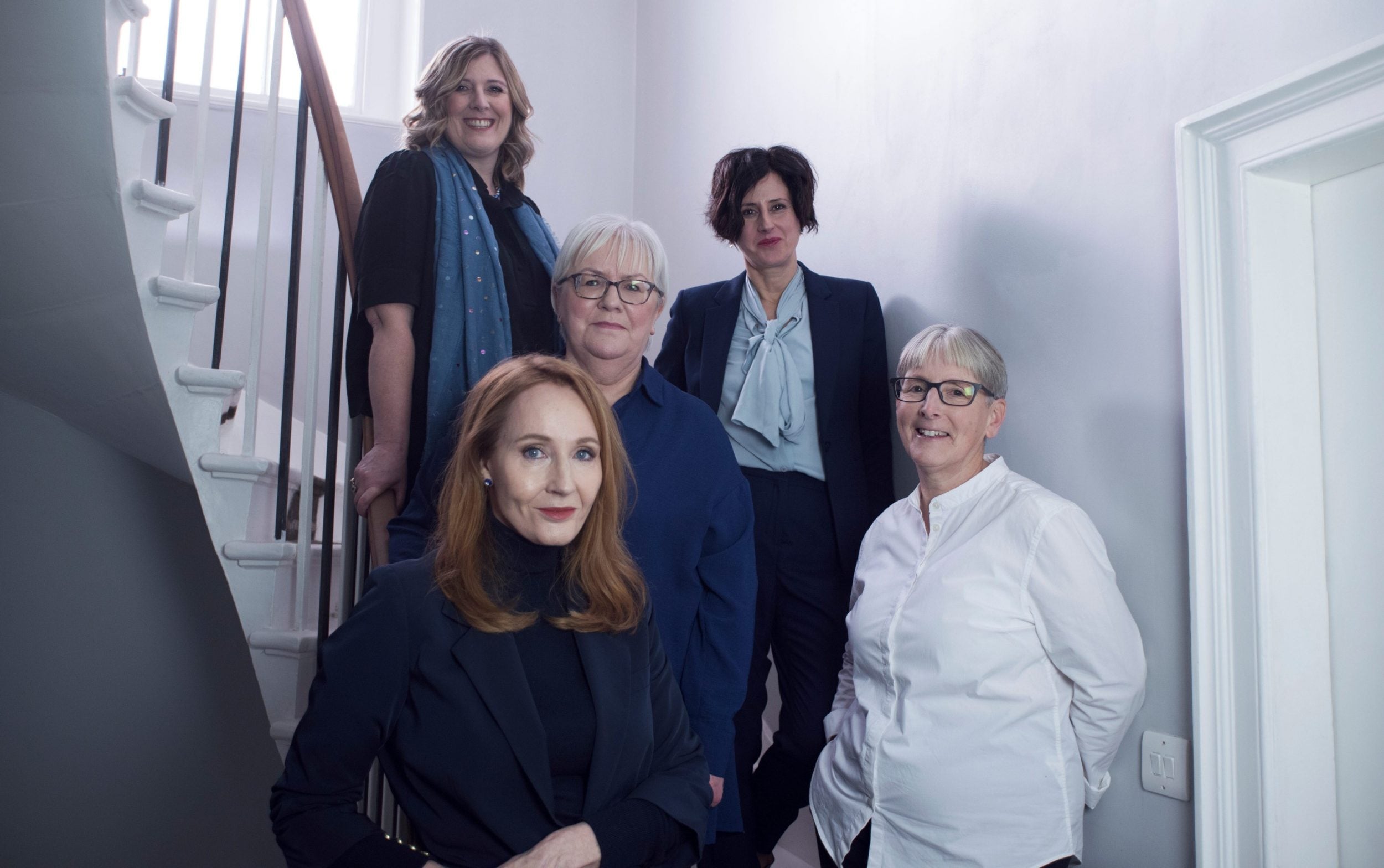
Beira’s Place was set up to deliver entirely female-led and female-delivered care - Nicole Jones
Beira’s Place (pronounced By-ra) was set up by Rowling to offer women who have been sexually assaulted “the option of women-centred and women-delivered care”. Men and trans women are not allowed into the centre, though Johnston stresses that when they get enquiries from people who can’t access the service because of their sex, they guide them towards other options. The centre is also happy to support non-binary people, provided they were born as girls.
The female requirement is certainly taken seriously. Before I visit, I mention I’d like to bring a photographer, and the press officer for Beira’s Place requests that they be a woman. The centre does sometimes have to call in the odd handyman, I’m told, but such visits are kept to times when there are no women receiving support in the building.
To some, this approach might seem a little extreme. But, Lamont says, it is a response to a need that women have expressed for care that is entirely female-led and female-delivered. She was inspired to get involved in part because she had learnt that similar services in Scotland were being effectively forced to allow trans women into female spaces, otherwise they might not be granted funding. Beira’s Place, she adds, answers the question, “Where do women go who are dealing with trauma and who want a woman-only space?”
Advertisement
“They know they can come here. It just stands as a service. That to me is the most important thing about it,” she says.
Since the centre opened, it has received more than 1,200 referrals – mainly from women seeking help for themselves, but also from charities, the NHS, police, local authorities and others seeking help on women’s behalf. Rape is the top reason that women come, accounting for 21 per cent of referrals, followed by sexual assault (19 per cent), childhood sexual abuse (18 per cent) and domestic abuse or intimate partner sexual violence (14 per cent). Other reasons include non-fatal strangulation, honour-based crime, stalking and trafficking.
Most of the women seen are under 40, which should come as no surprise, Johnston says, given that “the highest risk factors for being sexually assaulted are being young and being female”.
When a referral comes in, the centre aims to get in touch with the woman in question within three days, but normally does so on the day itself. Then, depending on her need, she will typically be offered 12 one-on-one sessions with a member of the support team. On a tour of the building, I see some of the rooms where the sessions happen. They are comfortable, peaceful spaces. A member of staff shows me a box filled with items – pine cones, fidget toys – that women sometimes like to hold during their sessions to alleviate stress.
Before coming to Beira’s Place, some women had never opened up about what had happened to them. Many, Johnston says, are not dealing with one isolated incident. “It’s very rarely one form of abuse,” she explains. “It’s usually complex. You’ve got your comorbidities – alcohol, substance misuse, perhaps having children taken into care, further sexual abuse and domestic abuse.”
A lot of the work the staff members do revolves around teaching those who have been through unimaginable harm to understand how their body and mind are processing it. For instance, why they might have flashbacks or remember certain details from their assault (cigarette smell, a rough material) painfully sharply. Often, women have to psych themselves up enormously just to come to the first appointment. Johnston has watched women hesitating outside, she says. She understands. “I can’t underestimate how traumatic it is for women who make that first step.”
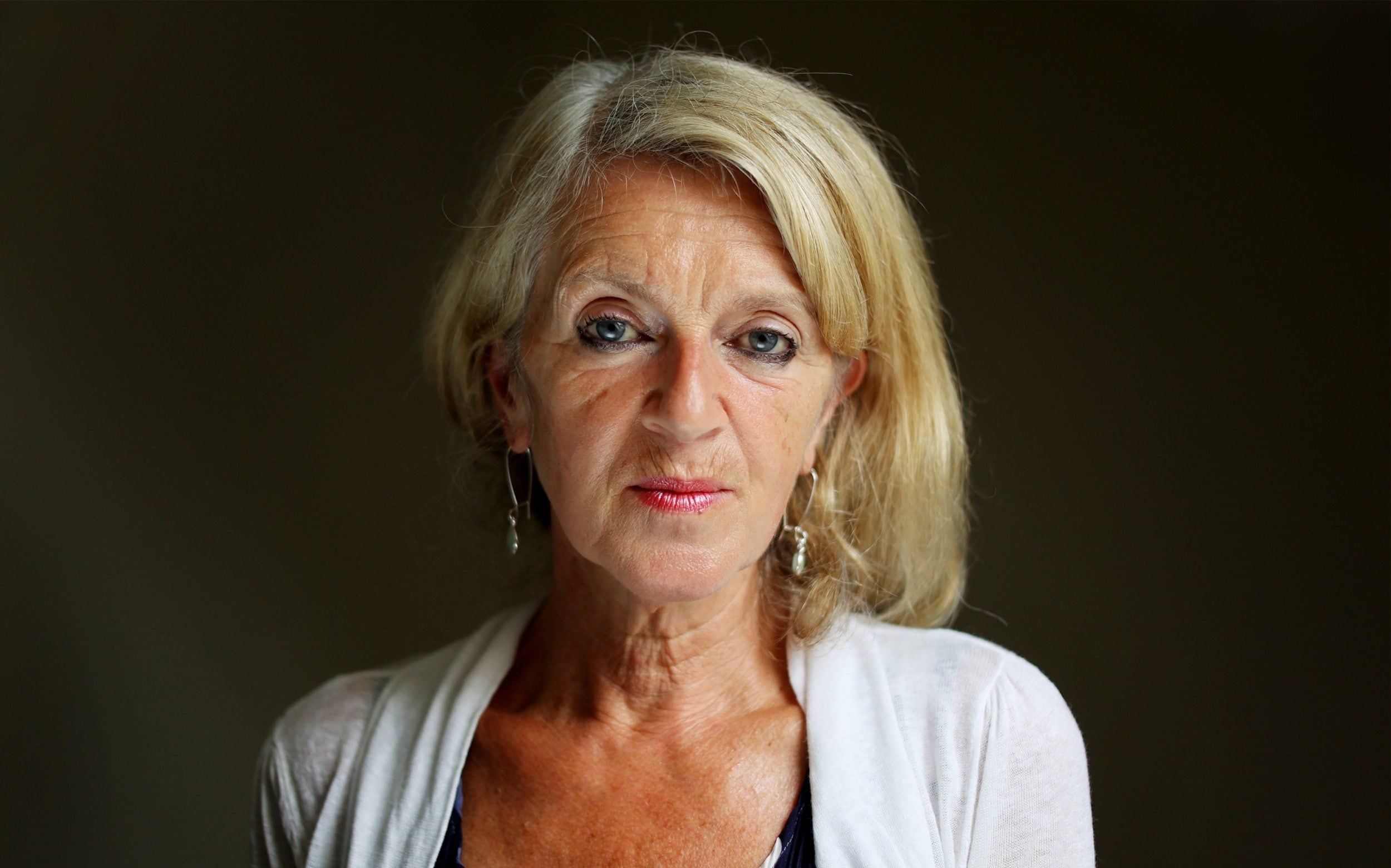
‘The levels of violence against women and girls are higher than when I started out [30 years ago],’ says Johnston - Clara Molden
But the help they get once they are brave enough to cross the threshold is evidently transformative. The women being supported are too vulnerable to be interviewed, but I am given sheets of testimonials, and they make for wrenching reading. “I don’t think I would have managed without the support I received,” one woman writes. “I had spent years hiding under a heavy cloak of shame,” writes another.
Some meetings take place outside the facility, but they’ve had difficulties renting rooms from venues because of how the centre is perceived. Often, cabs for women coming to and from appointments will be paid for by Beira’s Place, to ensure that poorer women get access to support. Still, says Johnston, there are sometimes no-shows. Unfortunately, since the Amnesty report claiming that Beira’s Place was “anti-rights”, no-shows have risen, while referrals to the centre have, she says, “dipped a little bit”.
The centre has previously received abuse on social media and via a chat function, which it previously had on its website, but which has now been closed. The quantity of abuse that has come in after the Amnesty report was published has reached such a pitch that staff have put up a board on which they pin messages of support. One pensioner asked whether he could buy the centre something “with his pension”. The centre doesn’t accept donations, as it is funded solely by Rowling.
But I imagine that it must be depressing, dealing on a daily basis with the aftermath of some of the worst behaviour imaginable, as well as abuse for doing so. Johnston, who is both warm and formidable, tells me she thinks that over the course of her 30-year career, “the levels of violence against women and girls are higher than when I started out”. She reckons that pornography and incels (derived from the term “involuntary celibate”) might be playing a role. It could also be that people are increasingly willing to be open about the abuse they have endured.
Occasionally, the centre will work with a woman who has misgivings about its point of view on gender and sex. One non-binary person it helped said she found it “jarring that we refer to women”, a staff member relates. “Some people believe we’re transphobic bigots,” she adds.
In 2023, The Student, Edinburgh University’s student paper, made its view on the centre clear when it ran an “exclusive” story, revealing in shocked tones that the university had “officially recommended Beira’s Place, a potentially misleading and harmful resource, to students who have experienced sexual assault”.
It would be tempting just to duck out, and work in an area that attracts less anger and fewer death threats. I ask Johnston how she came to become involved in the fight against gender-based violence in the first place. “I actually started when I was 17,” she says. Raised in Fife, she saw a note on a signpost in St Andrews looking for volunteers to set up a rape crisis service. “I thought, ‘Well, that sounds interesting.’” Police in the city were in denial that there was any kind of problem. “‘Oh, we don’t have rape here,’ they’d say.”
Since then, she believes that police attitudes have improved. But now there are other problems, including the time it takes for rape and other sexual assault cases to be dealt with by the courts. It is a problem that Beira’s Place is hoping to turn to next by hiring advocacy workers.
Lamont, the board member and former MSP, chips in to tell me that, with so many factors that lead to violence against women and girls remaining unfixed, it is easy to become “overwhelmed”. Still, she adds: “To me, Beira’s Place is about – well, we can’t sort everything for everybody everywhere – but we refuse to be overwhelmed. We’re going to create what we can. And this place does what it can for as many women as it can, in a way that’s going to help them as much as possible.
“You can have paralysis and think, ‘Oh my God, what do we do with all this?’ Well, actually, as JK Rowling says, ‘We’ll do this.”
Source: “AOL Entertainment”
